This is default featured slide 1 title

Go to Blogger edit html and find these sentences.Now replace these sentences with your own descriptions.This theme is Bloggerized by Lasantha Bandara - Premiumbloggertemplates.com.

This is default featured slide 2 title

Go to Blogger edit html and find these sentences.Now replace these sentences with your own descriptions.This theme is Bloggerized by Lasantha Bandara - Premiumbloggertemplates.com.

This is default featured slide 3 title

Go to Blogger edit html and find these sentences.Now replace these sentences with your own descriptions.This theme is Bloggerized by Lasantha Bandara - Premiumbloggertemplates.com.

This is default featured slide 4 title

Go to Blogger edit html and find these sentences.Now replace these sentences with your own descriptions.This theme is Bloggerized by Lasantha Bandara - Premiumbloggertemplates.com.

This is default featured slide 5 title

Go to Blogger edit html and find these sentences.Now replace these sentences with your own descriptions.This theme is Bloggerized by Lasantha Bandara - Premiumbloggertemplates.com.

Thursday, May 30, 2024

Android Games

God of War Ragnarok PlayStation 5 PC Santa Monica Studios

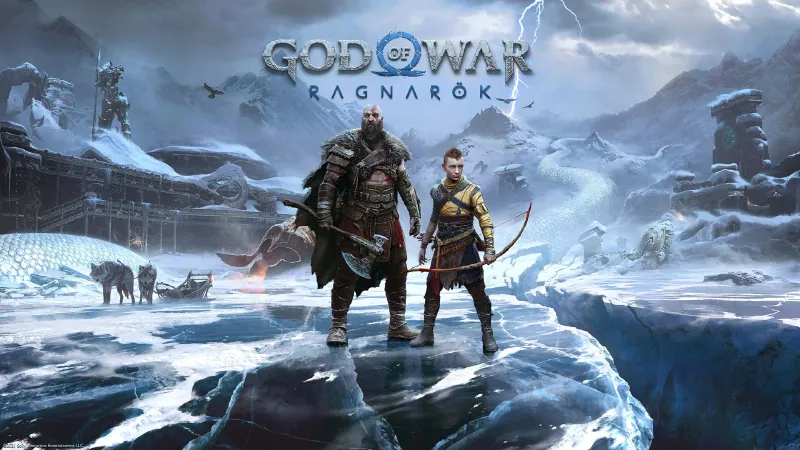
PlayStation has announced it is bringing its 2022 hit PlayStation-exclusive game, God of War Ragnarök, to PC. It revealed this during today's State of Play with a new trailer alongside a September 19 release date. 

This follows PlayStation's recent trend of bringing its single-player, narrative-driven games over to PC years after they first launch on PlayStation. Just this month, it brought Ghost of Tsushima Director's Cut to PC, and today, PlayStation CEO Hermen Hulst revealed all live-service games will launch day-and-date on PS5 and PC while "tentpole" single-player games will launch at later dates on PC. 

As you might expect, the PC version of God of War Ragnarök will feature unlocked frame rates, Nvidia DLSS 3.7. (and AMD FSR 3.1 and Intel XESS 1.3), super ultrawide support, and other PC features. This version of Ragnarök will feature the free Valhalla DLC from last year, too, and pre-purchasing the game gets you in-game rewards like the Kratos Risen Snow Armor and Atreus Risen Snow Tunic. 

Check it out for yourself below in the God of War Ragnarök PC reveal trailer

God of War Ragnarök hits PC on September 19, 2024. 

For more, read Game Informer's God of War Ragnarök review

Are you going to check out this game out on PC later this year? Let us know in the comments below!


from Game Informer News https://ift.tt/m1io2U3
via IFTTT

Android Games

Dragon Ball: Sparking Zero fusion warriors trailer

Dragon Ball: Sparking Zero’s latest trailer has unveiled fusion warriors for its roster. It also seems to tease another announcement on the horizon.

The trailer reveals the additions of Gotenks (the fusion of Goten and Trunks), Kefla (the fusion of Caulifla and Kale), Fused Zamasu, and Goku and Vegeta’s fusions, Vegito and Gogeta. Watch them trade blows in the trailer below: 

Since each fusion includes the fighters that make them up and their various transformations, the full list of characters joining the roster amounts to 21. Check them out below. 

  • Trunks (Kid)
  • Trunks (Kid), Super Saiyan
  • Goten
  • Goten, Super Saiyan
  • Caulifla
  • Caulifla, Super Saiyan 2
  • Kale
  • Kale, Super Saiyan
  • Gotenks
  • Gotenks, Super Saiyan
  • Gotenks, Super Saiyan 3
  • Kefla
  • Kefla, Super Saiyan
  • Kefla, Super Saiyan 2
  • Vegito
  • Vegito, Super Saiyan God Super Saiyan
  • Gogeta (Super)
  • Gogeta (Super), Super Saiyan
  • Gogeta (Super), Super Saiyan God Super Saiyan
  • Fused Zamasu
  • Fused Zamasu, Half-Corrupted

The trailer ends with a message serving as a classic callback to the anime that states, “Next time on Dragon Ball: Sparking Zero: Summer Game Fest 2024.” Could we be getting a release date at Geoff Keighley’s showcase? Given that the game was revealed during another Keighley show, The Game Awards 2023, it wouldn’t be surprising.

Dragon Ball: Sparking Zero is the next entry in what’s known in the West as the Budokai Tenkaichi series (Sparking is the franchise's original Japanese name). The roster is only halfway revealed, but we’ve already seen a number of confirmed fighters from Dragon Ball Z and Dragon Ball Super, including multiple versions of the same characters. The game has no release window but is coming to PlayStation 5, Xbox Series X/S, and PC. You can learn more about the game's new mechanics and features here


from Game Informer News https://ift.tt/w9dTHVY
via IFTTT

Mobile games

Dragon Ball: Sparking Zero fusion warriors trailer

Dragon Ball: Sparking Zero’s latest trailer has unveiled fusion warriors for its roster. It also seems to tease another announcement on the horizon.

The trailer reveals the additions of Gotenks (the fusion of Goten and Trunks), Kefla (the fusion of Caulifla and Kale), Fused Zamasu, and Goku and Vegeta’s fusions, Vegito and Gogeta. Watch them trade blows in the trailer below: 

Since each fusion includes the fighters that make them up and their various transformations, the full list of characters joining the roster amounts to 21. Check them out below. 

  • Trunks (Kid)
  • Trunks (Kid), Super Saiyan
  • Goten
  • Goten, Super Saiyan
  • Caulifla
  • Caulifla, Super Saiyan 2
  • Kale
  • Kale, Super Saiyan
  • Gotenks
  • Gotenks, Super Saiyan
  • Gotenks, Super Saiyan 3
  • Kefla
  • Kefla, Super Saiyan
  • Kefla, Super Saiyan 2
  • Vegito
  • Vegito, Super Saiyan God Super Saiyan
  • Gogeta (Super)
  • Gogeta (Super), Super Saiyan
  • Gogeta (Super), Super Saiyan God Super Saiyan
  • Fused Zamasu
  • Fused Zamasu, Half-Corrupted

The trailer ends with a message serving as a classic callback to the anime that states, “Next time on Dragon Ball: Sparking Zero: Summer Game Fest 2024.” Could we be getting a release date at Geoff Keighley’s showcase? Given that the game was revealed during another Keighley show, The Game Awards 2023, it wouldn’t be surprising.

Dragon Ball: Sparking Zero is the next entry in what’s known in the West as the Budokai Tenkaichi series (Sparking is the franchise's original Japanese name). The roster is only halfway revealed, but we’ve already seen a number of confirmed fighters from Dragon Ball Z and Dragon Ball Super, including multiple versions of the same characters. The game has no release window but is coming to PlayStation 5, Xbox Series X/S, and PC. You can learn more about the game's new mechanics and features here


from Game Informer https://ift.tt/w9dTHVY
via IFTTT

Android Games

Minecraft Netflix Series

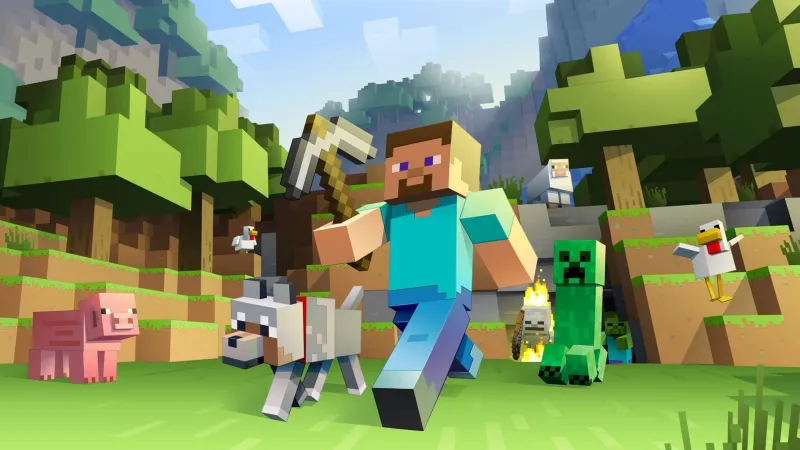
Netflix has announced a partnership with Mojang Studios to create a new animated series based on Minecraft. The news comes as part of a celebration of Minecraft’s 15th anniversary.

WildBrain, the studio behind other Netflix shows such as Sonic Prime, Ninjago: Dragons Rising, and Carmen Sandiego, is developing this CG-animated Minecraft show. Plot details are nonexistent, but a press release states the series will be "showing the world of Minecraft in a new light" and feature an original story with new characters.

This won't be the only on-screen adaptation of the best-selling video game of all time. A live-action Minecraft movie is currently in production, with Jack Black confirmed to star as Steve.  

The Minecraft show, whatever it winds up being titled, has no premiere date. In the meantime, be sure to catch up on the other video game adaptations Netflix has on the way, including the first teaser for Season 4 of The Witcher (now starring Liam Hemsworth), the first trailer for Arcane Season 2, and the first look at the animated Tomb Raider: The Legend of Lara Croft starring Hayley Atwell.


from Game Informer News https://ift.tt/XoLks90
via IFTTT

Mobile games

Minecraft Netflix Series

Netflix has announced a partnership with Mojang Studios to create a new animated series based on Minecraft. The news comes as part of a celebration of Minecraft’s 15th anniversary.

WildBrain, the studio behind other Netflix shows such as Sonic Prime, Ninjago: Dragons Rising, and Carmen Sandiego, is developing this CG-animated Minecraft show. Plot details are nonexistent, but a press release states the series will be "showing the world of Minecraft in a new light" and feature an original story with new characters.

This won't be the only on-screen adaptation of the best-selling video game of all time. A live-action Minecraft movie is currently in production, with Jack Black confirmed to star as Steve.  

The Minecraft show, whatever it winds up being titled, has no premiere date. In the meantime, be sure to catch up on the other video game adaptations Netflix has on the way, including the first teaser for Season 4 of The Witcher (now starring Liam Hemsworth), the first trailer for Arcane Season 2, and the first look at the animated Tomb Raider: The Legend of Lara Croft starring Hayley Atwell.


from Game Informer https://ift.tt/XoLks90
via IFTTT

Wednesday, May 29, 2024

Mobile games

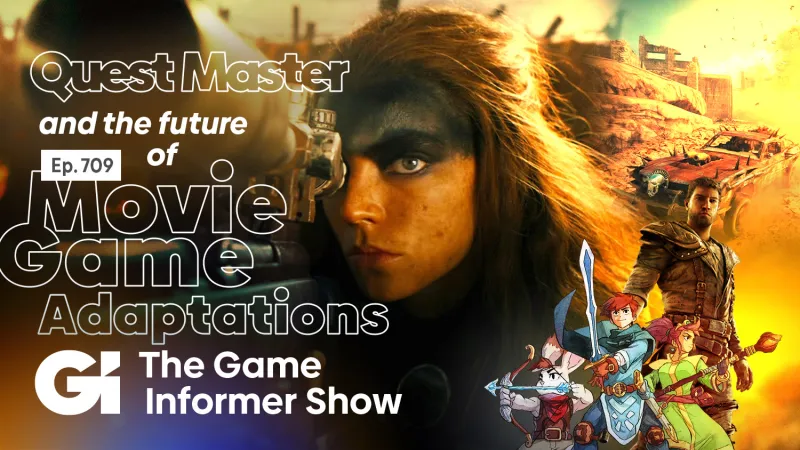
In this week's episode of The Game Informer Show, we played the "build your own Zelda" dungeon maker Quest Master, dived into Fortnite's new season of content (including Fallout), and revisited this year's remake of Mario vs. Donkey Kong. We also chatted about our love of Furiosa: A Mad Max Saga and reminisced about the 2015 Mad Max game, kicking off a discussion about the future of movie tie-in titles.

Watch The Video Version

Follow us on social media: Marcus Stewart (@MarcusStewart7), Kyle Hilliard (@KyleMHilliard), Charles Harte (@chuckduck365)

The Game Informer Show is a weekly gaming podcast covering the latest video game news, industry topics, exclusive reveals, and reviews. Join host Alex Van Aken every Thursday to chat about your favorite games – past and present – with Game Informer staff, developers, and special guests from around the industry. Listen on Apple PodcastsSpotify, or your favorite podcast app.

Matt Storm, the freelance audio editor for The Game Informer Show, edited this episodeMatt is an experienced podcast host and producer who's been speaking into a microphone for over a decade. You should listen to Matt's shows like the "Fun" And Games Podcast and Reignite, a BioWare-focused podcast.  The Game Informer Show – Podcast Timestamps:

00:00:00 - Intro
00:06:50 - Quest Master Early Access
00:22:12 - Fortnite Chapter 5 Season 3
00:36:41 - Mario vs. Donkey Kong (2024)
00:44:29 - Mad Max
01:01:16 - Movie Tie-in Video Games
01:18:08 - Housekeeping and Listener Questions
01:42:23 - The Lunch Break: Like A Dance Break but with Lunch (Working Title)


from Game Informer https://ift.tt/D6mTx5W
via IFTTT

Mobile games

Amazon Games Maverick Games partnership

Amazon Games has announced a publishing agreement with Maverick Games, a young studio formed in 2022 by former Forza Horizon developers. The developer’s first project will be a story-focused, open-world driving game.

Maverick Games is based in Warwick, UK, and was founded by six former leaders from Playground Games. Its roster includes studio head and creative director Mike Brown, former creative director of the Forza Horizon series, executive producer Tom Butcher, chief technical officer Matt Craven, and content director Gareth Harwood. It also includes former Playground audio director and art director Fraser Stachan and Ben Penrose, respectively.

Maverick Games staff

The studio announced in January 2023 that its first title would be a “premium open-world game for consoles and PC.” A press release includes an interview with Mike Brown, who provides hints of what Maverick’s game has in store, which appears to emphasize storytelling and character development more than you'd expect for a driving game. 

“Lots of great driving games have amazing gameplay, amazing content,” said Brown. “But to really cross that bridge, to become a game that people genuinely love, then there needs to be that human connection where you’re actually rooting for these characters, falling in love with these characters. That, I think, is a place where our game will be able to really differentiate itself from the other titles in the genre. There’s nothing about this genre that prevents it from having amazing characters and amazing stories – it’s just not really been explored yet.”

The press release also announces the hiring of Jamie Brittain, co-creator of the award-winning British TV drama Skins, as the game’s lead writer. Brown explains his belief in the power of good characters and cites Skins as an example of showcasing interesting, flawed characters to garner its cult-like following. 

Maverick Games’ project joins Amazon’s growing portfolio of games, which includes Crystal Dynamics’ upcoming Tomb Raider title, an MMO based on The Lord of the Rings by New World developer Amazon Games Orange County, along with its existing titles Lost Ark and New Word. 


from Game Informer https://ift.tt/3jeZWDI
via IFTTT

Android Games

Amazon Games Maverick Games partnership

Amazon Games has announced a publishing agreement with Maverick Games, a young studio formed in 2022 by former Forza Horizon developers. The developer’s first project will be a story-focused, open-world driving game.

Maverick Games is based in Warwick, UK, and was founded by six former leaders from Playground Games. Its roster includes studio head and creative director Mike Brown, former creative director of the Forza Horizon series, executive producer Tom Butcher, chief technical officer Matt Craven, and content director Gareth Harwood. It also includes former Playground audio director and art director Fraser Stachan and Ben Penrose, respectively.

Maverick Games staff

The studio announced in January 2023 that its first title would be a “premium open-world game for consoles and PC.” A press release includes an interview with Mike Brown, who provides hints of what Maverick’s game has in store, which appears to emphasize storytelling and character development more than you'd expect for a driving game. 

“Lots of great driving games have amazing gameplay, amazing content,” said Brown. “But to really cross that bridge, to become a game that people genuinely love, then there needs to be that human connection where you’re actually rooting for these characters, falling in love with these characters. That, I think, is a place where our game will be able to really differentiate itself from the other titles in the genre. There’s nothing about this genre that prevents it from having amazing characters and amazing stories – it’s just not really been explored yet.”

The press release also announces the hiring of Jamie Brittain, co-creator of the award-winning British TV drama Skins, as the game’s lead writer. Brown explains his belief in the power of good characters and cites Skins as an example of showcasing interesting, flawed characters to garner its cult-like following. 

Maverick Games’ project joins Amazon’s growing portfolio of games, which includes Crystal Dynamics’ upcoming Tomb Raider title, an MMO based on The Lord of the Rings by New World developer Amazon Games Orange County, along with its existing titles Lost Ark and New Word. 


from Game Informer News https://ift.tt/3jeZWDI
via IFTTT

Tuesday, May 28, 2024

Mobile games

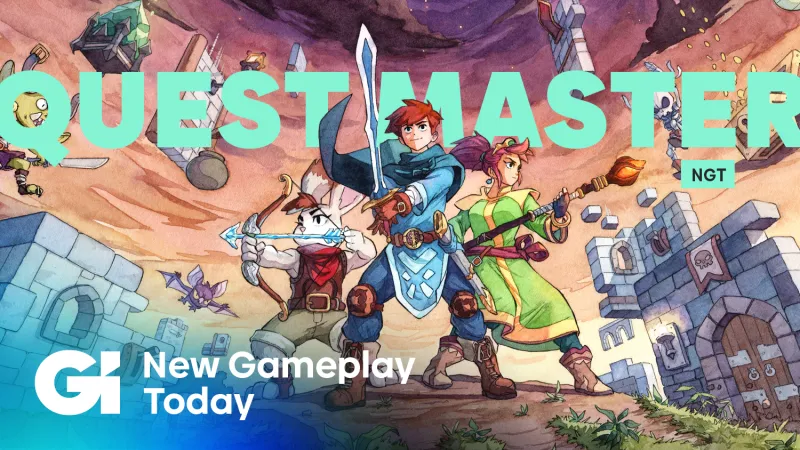
Quest Master New Gameplay Today

Quest Master answers the prayers of a certain segment of the Zelda fanbase by letting them create their own dungeons. With an art direction and gameplay heavily inspired by A Link to the Past, this fun homage is now available in Steam Early Access and gives players the tools to craft dungeons as clever or devious as they desire. Best of all, you can upload creations for other players to enjoy and experience the works of the community. Editors Marcus Stewart and Kyle Hilliard do just that, exploring Marcus' custom dungeon to show off some of the game's toolset before playing a (far superior) community creation. 

Head over to Game Informer's YouTube channel for more previews, reviews, and discussions of new and upcoming games. Watch other episodes of New Gameplay Today right here.


from Game Informer https://ift.tt/0lbgX9L
via IFTTT

Mobile games

Killer Klowns From Outer Space: The Game

Reviewed on: PC
Platform: PlayStation 5, Xbox Series X/S, PC
Publisher: Good Shepherd Entertainment
Developer: Teravision Games
Release:
Rating: Mature

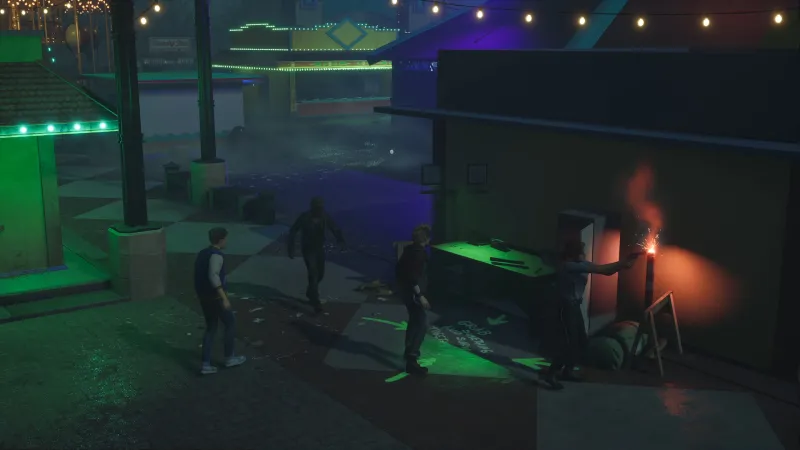
It’s only a matter of time before IllFonic perfects the asymmetrical multiplayer experience. Say what you will about its previous games; each one offered entertaining tweaks to the formula, small yet clever innovations, and a seemingly better understanding of what makes this genre so compelling. Killer Klowns From Outer Space: The Game embodies all these aspects, making it one of IllFonic’s best asymmetric games yet.

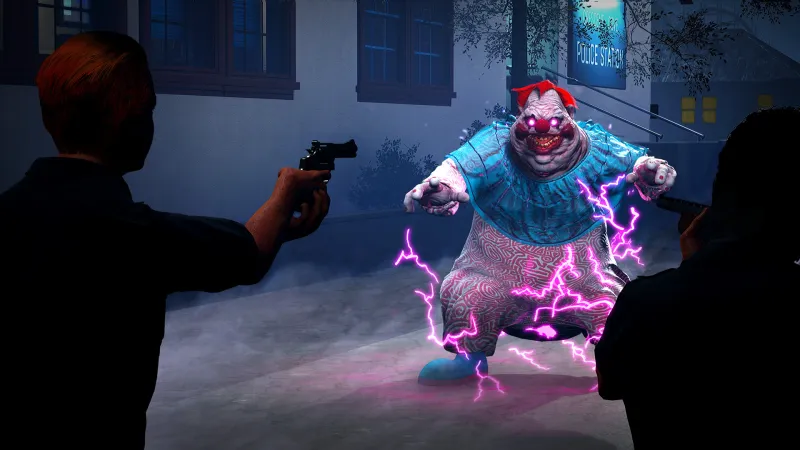
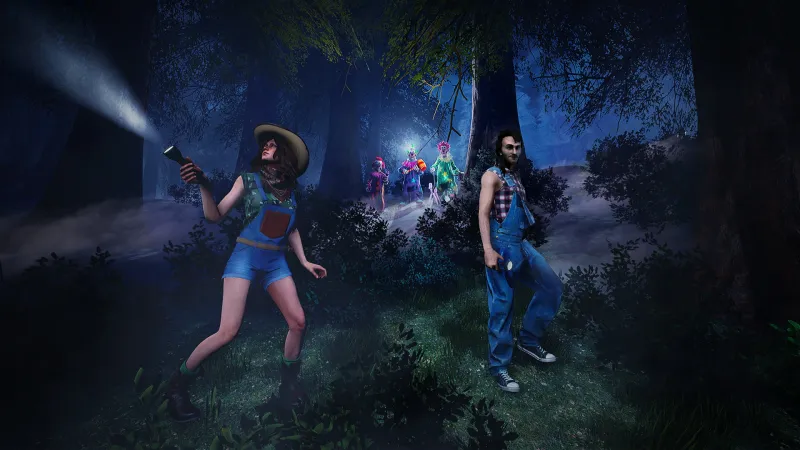
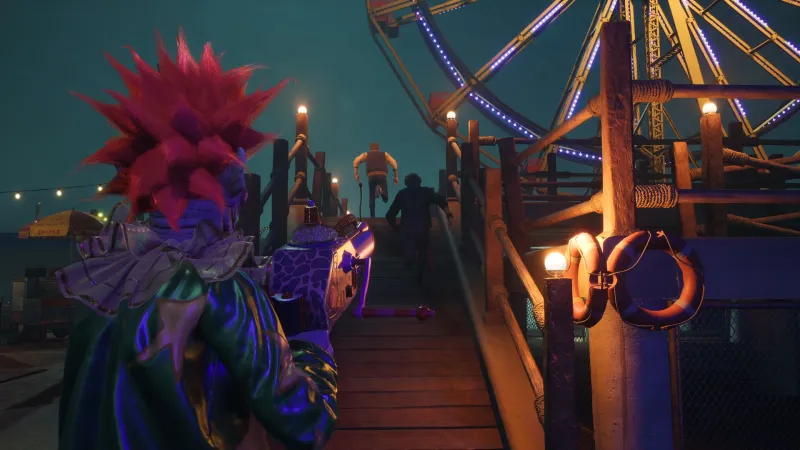
Killer Klowns From Outer Space: The Game offers a familiar gameplay loop for the genre. Seven human players must quickly locate an escape route within a given environment, find its required tools – a gas can and spark plug for a motorboat, for example – and complete a series of skill checks to finally exit the map, all while being hunted by three Klown players. Humans are chased left and right as ominous giggles fill the air. Large popcorn-spewing guns prove to be as deadly as they are silly. Conspiracy nuts relay important information via ham radios. Matches start calmly enough before devolving into a hilariously chaotic mess.  

On their own, these typical gameplay mechanics would suffice. It’s what fans would expect from this type of game. What makes Killer Klowns From Outer Space stand out is how well it balances its competing roles, which is initially expressed through their inherent differences. The humans can loot around for weapons, helpful tools (like a compass that shows where a map’s exits are), and health/stamina-based items to gain an edge over their colorful pursuers. Their smaller size allows them to be quicker on their feet, sneak through windows, and hide relatively easily after breaking a Klown’s line of sight. And while taking on a Klown solo using the right weapons is possible, being a part of a larger group allows for more team-oriented tactics during a scuffle.

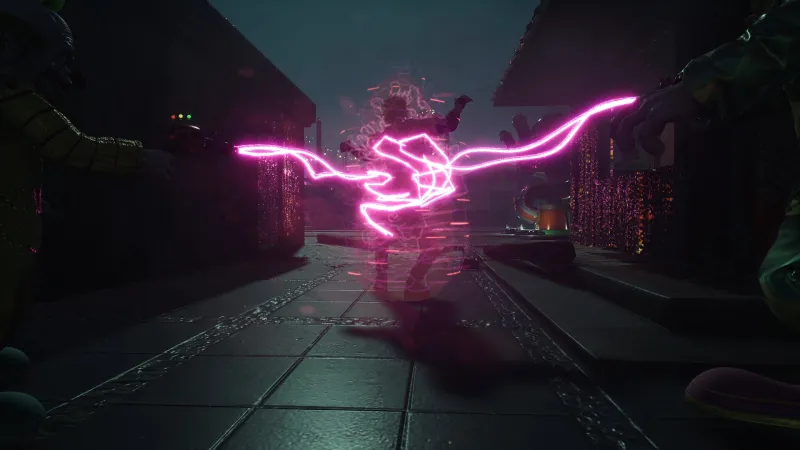
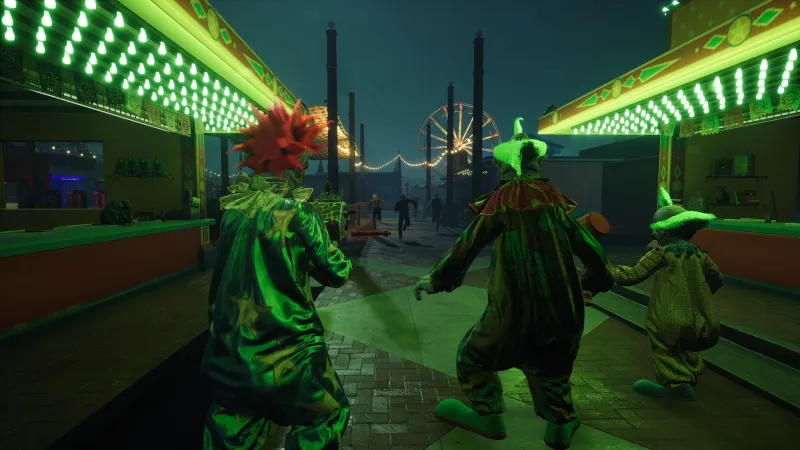
The Klowns, on the other hand, always pose an immediate threat. Not only are they usually sturdier than their human counterparts and have access to powerful abilities, but they also have time on their side; if the human players don’t escape within a 15-minute window, they’ll be caught up in an explosion dubbed the Klownpocalypse. Klown players can speed up this process by harvesting humans – i.e., zapping them with a ray gun until they’ve been encased in a cotton candy cocoon and then hooking them up to Lacky Generators scattered around the map – instead of outright killing them, ending the match prematurely.

This balancing of roles also extends to their varying objectives. The Klowns can cover exit routes with cotton candy that must be removed in order to interact with them. Humans need to take their time with most things, as failing a skill check or otherwise making noise will alert the Klowns to their whereabouts. That said, all hope isn’t lost if you’re caught out in the open, as death isn’t always permanent; humans can visit a resurrection machine, acting as a sub-objective, to bring their teammates back once per match.   

Killer Klowns From Outer Space has a ton of varied yet interconnected game mechanics that collectively succeed at keeping matches as fair as possible. I’m sure that’ll change as more players discover new strategies through prolonged play. But as of right now, no role dominates the other when playing with a full lobby, resulting in one of the most entertaining asymmetrical games I’ve ever played. It’s fun hunting down unsuspecting humans and bashing them into submission with a giant mallet. Using my particular Klown’s special abilities to close the gap on a fleeing victim is also a highlight; ramming folks with an invisible car or tracking them using a living balloon dog never gets old.

Likewise, finding new ways to elude pesky Klowns as a fleetfooted teen always got the blood pumping. Successfully completing a final skill check as the last living player while hearing the sound of big floppy shoes a few feet away is exhilarating. The same can be said of facing a Klown head-on with only one bullet left, knowing that if I missed their rubber nose (their primary weak spot), I would get a face full of deadly popcorn. And because my death was most likely brought upon by some whacky ability or weapon, I always found myself laughing at what happened over being frustrated.


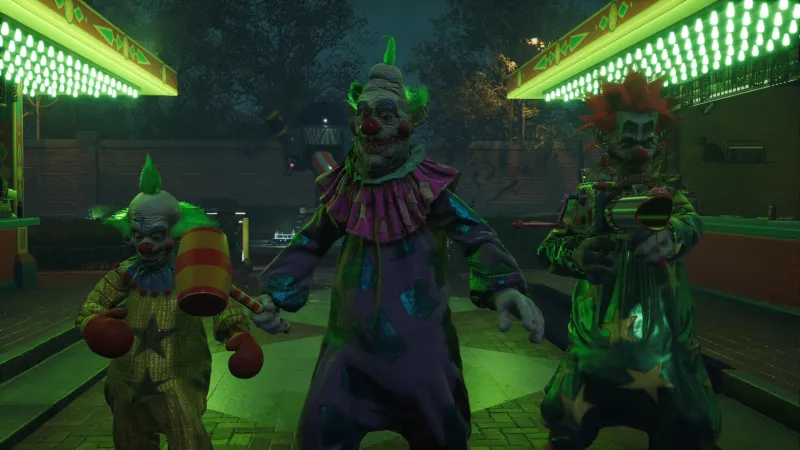
The core gameplay isn’t the only appealing aspect of Killer Klowns From Outer Space. Visually, it’s a treat for movie fans as the vibrant ‘80s aesthetics permeate everything within its five well-designed maps. The humans look decent enough, especially after unlocking more cosmetic options. All five of the creepy-looking Klowns are impressive, though. It’s like they’ve been lifted right from the film the game is based on. I especially love their Klowntatities. These special finishing moves are cinematic, cutting to gamified versions of iconic moments from the movie, letting you and your foe act them out in the middle of a match.

Killer Klowns From Outer Space can be extremely entertaining at times. Unfortunately, it does have some glaring issues that keep it from reaching its true potential. There are plenty of bugs to contend with; glitching objectives, occasional crashes, and more plague what is otherwise a fun experience. 

IllFonic has announced plans to address many of the biggest issues I found while playing. However, even in its current state, aside from one bug that resulted in losing cosmetic unlock progress, the bugs I encountered weren't egregious. Still, it's worth noting that Killer Klowns from Outer Space still has plans to improve in these areas.

In its current state, Killer Klowns From Outer Space: The Game is a good asymmetrical multiplayer game. The gameplay mechanics that help balance the competitive roles reinforce the lessons IllFonic has learned over the years, while its comical nods to the film and impressive graphics showcase the respect given to the source material. If IllFonic can iron out the bugs in the coming patch and provide solid post-launch content, Killer Klowns From Outer Space could become the best this genre has to offer.

Score: 8

About Game Informer's review system

Purchase

from Game Informer https://ift.tt/J9gYUFy
via IFTTT

Android Games

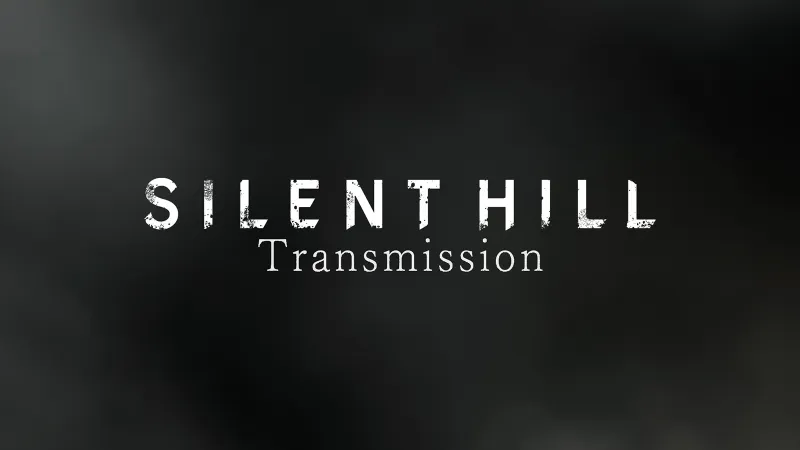
Konami revealed it is holding another Silent Hill Transmission event on May 30 at 4 P.M. PDT. The last Silent Hill Transmission happened in 2022 and revealed a surprising amount of Silent Hill news including the reveal of the remake of Silent Hill 2, Silent Hill f, a new Silent Hill movie, and more.

The post announcing the event reads, "Consider this your invitation letter to Silent Hill. ✉️ Tune in May 30 at 4 p.m. PDT to our SILENT HILL YouTube channel for the second installment of the #SILENTHILL Transmission where we'll share game updates, a deeper look at the film, and new merch."

The safe bet is a teaser trailer for the movie and hopefully new details about the Silent Hill 2 remake and Silent Hill f, the latter of which seems like the franchise's next big original entry. Silent Hill Ascension, the online mobile narrative game where players dictated the story choices, also finished up its first season (though the developer may have a different term for it), so it's possible we may learn what's next for that game.


from Game Informer News https://ift.tt/v4QaKo8
via IFTTT

Monday, May 27, 2024

Mobile games

Platform: PC
Publisher: tinyBuild
Developer: Redemption Road Games

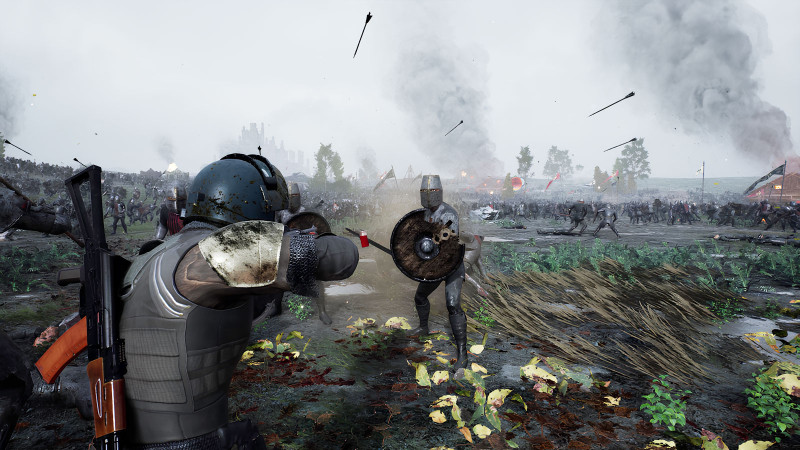
If you haven’t seen the trailer for Kingmakers, I encourage you to watch it now before continuing. If you have, or perhaps you are reading this magazine in an effort to limit screen time (you’re doing great, and we appreciate your support), I can’t continue to talk about the game without spoiling its major twist. The trailer teases what appears to be a medieval strategy game with base-building elements before a contemporary, but admittedly junky truck screams through time to arrive in the middle of a battlefield brimming with horses, suits of armor, and presumably the shouting of old English phrases, but it’s difficult to hear through the chaos.

What follows is something closer to Dynasty Warriors, where one man with modern weapon technology like guns and missile launchers wages war against armies of the past. The premise is immediately enticing, bizarre, and funny, but Kingmakers’ creators, brothers Ian and Paul Fisch, are taking a surprisingly grounded approach to its game while fully embracing the absurd but compelling idea.

“The plot is important, especially when it comes to the historical accuracy,” Ian says. “It’s not just a generic medieval setting. You’re in the 15th century. You’re fighting against Henry Bolingbrook – Henry IV – and his son, Henry V.” This came as a shock to me because after watching the trailer, I fully assumed Kingmakers was a tongue-in-cheek action game about fighting medieval soldiers with modern weaponry, and while that is certainly the case, Ian is clearly passionate about history. He spends the next few minutes of our interview talking about that era of history, England’s relationship with France at the time, and commiserating about how the 2018 Timothée Chalamet film The King and Shakespeare’s Henry V both got the history wrong. “Ian likes to history-nerd out and go really deep,” Paul says. “We do try to keep this accurate lore, and then you intervene. Then the idea is that – you know – you’re altering history.”

And that historical intervention will apparently offer different outcomes. “The game has many endings,” Paul confirms. The trailer does not go deep into the game’s story, which is by design. The Fischs did not want to bog down potential players with lore in that first look. “I don’t think a trailer should start naming a bunch of proper nouns and places and characters,” Ian says. But for those who do dive into Kingmakers when it releases, the story will be a driving force.

Despite the action of fighting medieval armies with modern weaponry, you will not be playing as a trained soldier. Instead, you are a member of a team of scientists who are trying to figure out what in the past led to the current-day apocalypse. Your team has invented a time machine that lets them see the world shift and change around them due to decisions made in the past. They learn they must unite England, Wales, Scotland, and “a little bit of Ireland,” as Ian phrases it, to prevent a terrible future. You’re not an army with an unlimited government budget – you’re a scientist trying to prevent present-day calamity.

And it is possible to fail, or at least arrive at a very confusing finale. The trailer offers a tease of what appears to be an optimistic outcome in a futuristic city with cat-shaped floating ships, but everything is not as it seems. “If you pay close attention at the end, you’ll see that that cat-ship opens up and just rains down human skulls and other bones. So, it’s not exactly optimistic,” Ian says.

The story was the unexpected element of Kingmakers that drove my conversation with the Fisch brothers, but the duo and their team are also passionate about making a compelling action game with unique mechanics. As the time-traveling scientist, you will be jumping into the middle of the fray, but you will also be building defendable bases and commanding your army. So, alongside firing guns and driving trucks through swaths of soldiers, you will also be issuing orders, and doing it all with others online if you so choose. You will be able to assist your friends with their ongoing campaigns, and they can do the same for you. While specific details about how multiplayer will work are still being locked in, the Fisch brothers make it clear they want it all to be jump-in-jump-out.

“It’s a third-person, but it’s also simulation?” Paul says, not ready to fully commit to a specific genre. “It doesn’t have to be these narrow genres because people like lots of genres, and they want to see interesting matchups of those genres,” Ian says. Kingmakers enters Early Access later this year, which will be our chance to see exactly what this unusual game really is.

This article originally appeared in Issue 365 of Game Informer.

Purchase

from Game Informer https://ift.tt/evF2kO7
via IFTTT

Mobile games

In 2009, a video game called Canabalt was published on the iOS App Store. It had a simple premise: Your character flees through a crumbling urban landscape, making great leaps across rooftops at the touch of your phone screen. It met great success and charted in what was then only a burgeoning mobile game ecosystem. Canabalt popularized the infinite runner genre and would ultimately put its designer, Adam Saltsman, on the map.

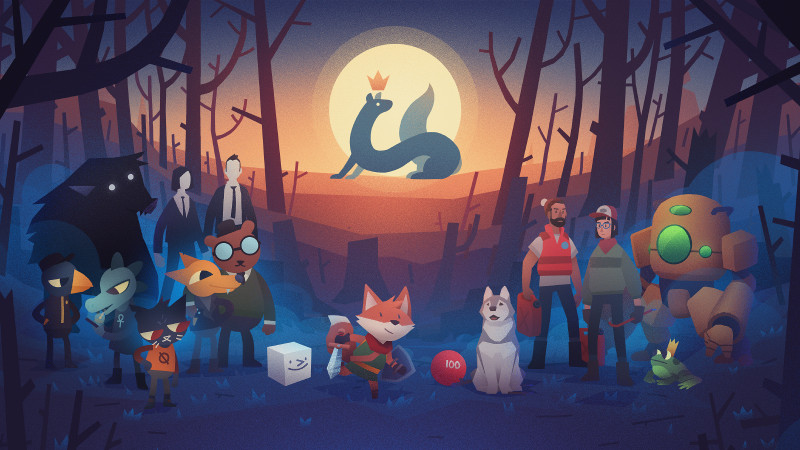
Now working under the name of Finji as its creative director, Adam’s rise as a designer as well as his partner’s, Bekah Saltsman, as both a publisher and CEO, has been stunning to watch, especially considering the simplicity of that first big hit. Whether you’re playing the bass guitar as Mae Borowski in Night In The Woods, organizing patchwork-colored boxes in Wilmot’s Warehouse, or floating listlessly through space in Capsule, Finji continues to offer memorable, beautiful experiences from trailblazing game designers unlike any other.

But for Adam and Bekah, in those early days of entering the indie game industry, everything always led back to that original, impossible question: How do you even make a video game?

Overland

Bridging The Gap

For as long as Adam can remember, he wanted to be a video game artist. Fascinated with the vibrant colors and rich SunSoft sound chips of original NES cartridges, the video games of his childhood quickly took over his imagination. He designed his own levels for Super Mario Bros. on sheets of grid paper. He ordered floppy disks with the Wolfenstein level editor built-in. He experimented with the Doom level editor, then eventually the Quake editor. However, despite being a part of this growing generation of designers with a dream to create console games that felt like some of their childhood favorites, it was never clear how exactly you get from hobbyist to career.

“That gap, in the early 1990’s in rural Michigan, is a very wide gap,” Adam says.

Upon graduating from the University of Michigan alongside Bekah, the Saltsmans made the move out to where the ever-growing indie scene was just beginning to flourish: Austin, Texas. An environment with excellent studios and cheap rent seemed the perfect place for Adam to cut his teeth and enter the industry. Unfortunately, getting your foot in the door at major developers of the time was much more complicated than anticipated, so he looked to other routes. In 2006, Adam transitioned into tech contractor work to dedicate sufficient time toward launching his and Bekah’s new studio, Last Chance Media. Beginning with only a few days each month, the two created simple, arcade-feeling Flash and iOS games that promoted simple game mechanics and aesthetic sensibilities that fit into Adam’s love for pixel art and incredible game soundtracks. Around this time, Adam’s first major titles begin appearing: Canabalt, Gravity Hook, and Fathom. Adam’s platformer, Fathom, had an especially intriguing finale that took some of his fans at the time by surprise – a boss fight you could not win.

Canabalt

“You die, and you have this bizarre exploration experience,” Adam says. “You find this door at the bottom of the ocean, it opens up, and you sink down into it.”

Until that point, the Saltsmans’ stories in games always seemed to present something both unexpected and unnerving: a sinking robot, a crumbling city, a suffocating space mission. The games were always fun and engaging, but they had something larger to say. Each new project from Adam and Bekah were then examples of both creativity in design and were challenging the idea of what a game could even look like. That philosophy would eventually spur the change of Last Chance Media into their latest team-up and best-known collaboration: Finji.

Finji Begins

Having scraped and saved for nearly 10 years, the Saltsmans were finally ready to unveil their development studio, Finji, on March 3, 2014, along with its first major internal project: Overland. It marked an exceptionally creative endeavor for Adam and Bekah, leaving behind action platforming in favor of eerie, strategic grid-based movement. Any given level is presented from a bird’s eye view, showing various interactable elements for your character and hiding others within obscuring shadows.

“The diorama, at a glance, should look like a little apocalyptic story,” Adam said. “That was the rule for the level design: there should clearly be your characters, menacing forces and an escape route.”

Night In The Woods

However, before they could reach that final product, the Saltsmans put out a very candid, transparent request on their blog, seeking animators and audio engineers who weren’t looking to create something that sounded or looked like anything else on the market. Rather than base qualifications simply on prior experience or padded portfolios, they ensured interested artists were considered through paid, practical demos and tests that proved their intuition and problem-solving skills rather than simply their past work.

Adam and Bekah have always been keenly aware of the toxicity in some of the gaming industry’s highest-stake work environments, particularly regarding “crunch time” before release. That attitude bleeds not only into their game development but also into their relationships with creators as studio publishers themselves. In fact, before they agreed to publish Tunic with creator Andrew Shouldice, they mentored him on the project for years prior. This way, Finji could view Shouldice’s work on the game not only from a marketability, quality-assurance, or localization perspective (which was crucial) but also as fellow creative partners.

I Was A Teenage Exocolonist

“Our relationship didn't start with a publishing negotiation; it started with them taking time to give a stranger some feedback and advice,” Shouldice said. “It's that willingness to help that I think makes them such an important part of the game development community.”

Another of Finji’s published games, Wilmot’s Warehouse, first appeared as a part of Humble Monthly on Steam, but creator Richard Hogg knew that in order to improve the game’s performance and expand its audience, he would need a proper publisher. While Hogg had worked with various publishing groups before, it seemed that Finji was especially capable of providing a friendly, cooperative relationship in which everyone involved could have input on the game’s design. Much like an indie record label that emerges from veteran bands supporting younger artists, Finji’s own history in creating games sets it apart from other publishers.

“Finji is exactly like this, and, just like with those labels, there is an integrity and a camaraderie that naturally comes out of it,” Hogg said.

Ten years after those initial Overland blog posts, Finji is still looking for projects unlike anything else and continues to make space for game developers and creators who wouldn’t usually be in the room. In Adam’s experience, he’s found that indie developers often fit into two modes: People who want to make games just like their favorites or people who want to make games that correct the flaws in those same titles and invent something new. More often, however, a Finji game fits in neither category. There would be no Chicory: A Colorful Tale without Link’s Awakening. No Canabalt without Mirror’s Edge. No Night In The Woods without one of Adam’s own personal favorites: Kentucky Route Zero.

“You are giving the player an experience they otherwise would not have had,” Bekah said. “They are able to experience games in a way that they’ve never experienced games before. That idea is fed through Night In The Woods.”

Wilmot's Warehouse

Seven years since Night In The Woods’ initial release, the game continues to leave as much of an impact as it did when fans first played it. Its casual platforming roots meant for an especially approachable gaming experience, and Scott Benson’s wholly unique art direction helped the game transcend its medium and find itself in myriad forms; fan art, tattoo designs, cosplays, and more.

“There were thousands upon thousands of responses on social media, from people who discovered it last week to people who discovered it seven years ago, talking about how that game not only changed what games were for them but also changed them as a person,” Bekah said.

Perhaps the most recognizable aspect of Finji, beyond their award-winning games, is its logo: a ferret wearing a crown. Designed by Richard Hogg (creator of Finji’s published title, Wilmot’s Warehouse), the design embodies two very important parts of the founders Adam and Bekah Saltsmans’ lives.

The crown is representative of their eldest son, Kingsley, while the ferret mascot is a sly reference to Marty Stouffer’s Wild America on PBS, which featured a mob of pet ferrets in one episode. The scene showing their escape is a favorite of Adam’s.

As for “Finji,” the studio’s name serves as a loving homage to the childhood nickname for their youngest son, Finnegan.

Combining elements of the Saltsmans’ humor, inventiveness, and nostalgia were paramount in Hogg’s logo design.

The sheer approachability and ease of access toward Finji games like Night In The Woods remains one of the studio’s hallmark factors and one the Saltsmans pride themselves on. “No Fail” mode was included in Tunic so combat-averse players can still enjoy the adventure. In the BAFTA award-winning Chicory: A Colorful Tale, you have a fast-paced, engaging action-adventure that still relies on a touching story about creativity and passion. In these same seminal titles, Finji brings together creative teams and designers who lend their original voices to the blossoming indie game industry.

“Chicory is a great example because you have somebody who maybe hasn’t art directed a game that size before, and so it looks super special,” Adam said. “And you have very subversive gameplay. You don’t hurt anybody in Chicory.”

Tunic

These past 10 years, Finji has shown that person-first, supportive video game publishing and development can lead to higher quality experiences, never sacrificing camaraderie for crunch. The unifying factor between their games, then, is the incredible attention to detail each of their gathered teams present toward story, setting and character.

“You can tell these all go together, even though none of them look the same,” Bekah said. “They have this hyper-dedication to place, where the place is an extra character in the game that has motivations that act out upon the player.”

Nowhere will this be truer than in Finji’s upcoming 2025 title.

Spiritual Successor

Overlapping with the marketing and releases of both Tunic and I Was A Teenage Exocolonist (from Sarah Northway, marking the first woman-led release with Finji) development began for Finji’s newest title, Usual June, in February 2021. The fundamental design was going to be very different from its past published releases, like Tunic. Usual June would be a more bespoke and considered experience, less so an open-world for the player to freely explore. It’s also the first development project from Finji since Overland’s release in 2019. But while Overland and Usual June are both stories about the end of the world, the latter marks another major genre departure for the Saltsmans and Finji: a 3D action-adventure.

“An initial inspiration was Secret Of Mana, which is Bekah’s favorite game,” Adam said. “It has real-time battles with dodging and charge attacks. We thought, let’s take the guts of that.”

Chicory: A Colorful Tale

Usual June is a paranormal story, fundamentally a mystery story, but not with a normal, formulaic detective structure. The playable character, June, has the supernatural ability to speak with ghosts, which when combined with the “weird-looking, glowing stuff” (as Adam puts it) briefly shown in the trailer, you’re left with the notes of impossibility lying at the root of Usual June’s mystery. The worldbuilding for Finji and their narrative collaborator, Sweet Baby Inc., then became a sort of experiment: How would a normal-enough town of people react to sudden changes of supernatural phenomena? What are the consequences of learning about the paranormal beneath the surface?

“In Usual June, you will mostly see what June sees and mostly understand what June understands, which is not going to be everything,” Adam said. “There will be things that you don’t fix, there will be some things that don’t get explained or are too hard to explain. I hope that’s one of the things that people love about it, that there’s space to inhabit and think about it.”

Usual June

One way players will be able to inhabit the mystery of June’s town, Fen Harbor, more fully is through its inclusive storytelling within the detective-mystery as a whole. Rather than rely on checklists for June to mark down as the mystery comes to a close, Adam and Bekah lean further into the common tropes of some of their favorite sci-fi and supernatural mysteries, like Buffy The Vampire Slayer, I Am Not Okay With This, and even, for Adam especially, the Godzilla films.

To demonstrate this, Adam began to act out a noir-like scene where a hard-hitting journalist might be visiting a mysterious character who knows more about the mystery than they’re letting on. He proceeded to fish around and pick up miscellaneous objects from nearby shelves in order to seem aloof as he continued to question his suspect.

“Outside of Phoenix Wright, I’ve never seen a game work like that,” Adam said. “The story areas weren’t a 3D space where you can wander around and look at weird stuff on the shelf while you banter with a character.”

Adam and Bekah Saltsman

With much more to learn about Usual June before its release sometime next year, the Saltsmans and their team at Finji look forward to teasing further secrets. How does a missing kid case fit into June’s life? Where is this alternate world full of neon-colored caves and crystalline monsters? And what’s the connection between June’s powers and Teddy, her friendly ghost companion?

All of that remains to be answered... Or will it be?

“It’s not going to be a game where all the things get explained,” Adam said. “A lot of the joy for us is going to live in leaving places for people to have fun in the fog.

This article originally appeared in Issue 365 of Game Informer.


from Game Informer https://ift.tt/X5JcKvZ
via IFTTT

Mobile games

I woke up this morning and put on a white Hanes t-shirt mass-produced by a machine able to produce clothing at a rate no human ever could. But shirts like this used to be made by humans. While making coffee, I ask Siri on my iPhone what the weather will be like today and what my day’s schedule looks like, and a few seconds later, an artificial intelligence-powered voice gives me the answers I’m looking for. After sitting down at my work computer to write this, I opened Spotify and checked out my Discover Weekly playlist, hyper-curated to my tastes based on the other music I’ve listened to over the past week.

On Instagram, my ads feel uncannily targeted to me, and on X (formerly Twitter), I see a new batch of posters for Amazon’s upcoming Fallout streaming series called out for using A.I. None of this is possible without machine learning, which is what powers A.I. in other, more automated interactions some people use in their life and work, be it the chatbot ChatGPT, image creator Midjourney, or something else. But, as things like Siri, targeted ads, and curated playlists on Spotify settle A.I. into our lives in such a way we might not realize, there’s a war brewing between humans and A.I. (and the people developing it and advocating for it) in the games industry.

Caves of Qud uses Markov chains, a type of generative A.I., as a tool for statistical prediction

“We’ve elevated as a species – we have the idea of creative art as personal expression,” Brian Bucklew, co-creator of the popular sci-fi roguelike Caves of Qud, tells me. “Generative A.I. is extremely transgressive because it’s not only displacing jobs, it’s displacing humans from a space where we’ve decided, ‘This is about personal expression.’ We’re looking at it and saying, ‘Can [A.I.] be good art if there’s fundamentally no expression underlying it?’ Nobody has an answer to that. [A.I. in creative spaces like art] is totally new, and I don’t think we’ve reckoned with that at all.”

A.I. in Independent Spaces

Bucklew is one of the many independent developers – solo and within studios outside the triple-A publishing machine – I spoke to about A.I. and its use and effect on game development. Bucklew’s Caves of Qud has been in development for more than 15 years. He says he’s watched functions and jobs previously held by humans get replaced by automation and A.I. throughout his career. Even things he used to code by hand are now automated in game development engines like Unreal. He also says Caves of Qud is in a sub-genre that explicitly uses generative systems.

“These aren’t [language learning models (LLMs)]; this is not Midjourney,” he says when I ask if he uses A.I. in the game’s development. “This is not some of the new attentional-based A.I. that is getting a lot of the press right now, but this is absolutely machine-based generative systems. So the answer is no if you’re asking if we use LLMs to generate code, but the answer is yes, we use, for example, Markov chains [generative A.I. that uses current events to analyze the predictability and production of subsequent events] to generate books. And these really aren’t that different except, again, in scope.”

He says LLMs and Markov Chains are different but that both are statistical predictors; the latter is more primitive than the former, however. In either use case, he says good results come from hand authoring on top of the generative use of A.I. Javi Giménez, the CEO of Moonlighter and Cataclismo developer Digital Sun, agrees, noting there is no top-down mandate at the studio to use A.I. but that various developers there use it as a tool alongside their creative output.

Cataclismo

“What has happened naturally is that some people at the studio – sometimes it’s artists, sometimes it’s programmers, sometimes it’s designers – use some of the tools for specific tasks,” Giménez tells me. “Some artists, for example, might be using it to create compositions based on images they already created to explore things fast. [What] I see is that professionals on the team are adopting A.I. as something that empowers them [...] and that’s something happening naturally.”

Guillaume Mezino, founder and developer at Kipwak Studio, which is working on a 3D wizard school sim called Wizdom Academy, says he first made the use of generative A.I. programs like Midjourney mandatory. Instead of using Google Images to search for references to creatures for players to encounter, developers at Kipwak used Midjourney.

“I said to all my team members, ‘Try to use it as best you can in every way you can and let’s see where we can go from that,” he says. “After a few days, it was the best decision ever. The artists saw it as a good ally to help them make decisions and open their minds to new possibilities.”

Wizdom Academy

Of course, it’s important to note there’s an inherent relationship between Mezino, the studio's founder, and the employees there that might prevent said employees from saying otherwise. After all, he mandated A.I. to begin with. Would these developers want to use A.I. of their own volition? Anecdotally, within the wider games industry, I’d say no.

When I ask Mezino about A.I. replacing jobs at the studio now or in the future, he says most of the work A.I. does for Kipwak is work that a human would never have done. For example, he says Wizdom Academy features a lot of artwork. “If I had to pay humans, if I had to pay people to do 150-plus artworks, we would have never been able to do it,” he says. Instead, someone at the studio used A.I. to create those artworks. I ask if Wizdom Academy would exist without A.I. He says it would – just not as fast or as good. There’d be less art, fewer conversations (also powered by A.I.) to have with teachers at the school, and overall, “We would have gone for something way simpler, so less appealing, and I don’t think anyone wants that.” But that begets another question: Do people want the version of this game that uses A.I.?

Wizdom Academy

Even though Giménez’s studio uses A.I. in its processes, he still feels there’s a legitimate concern about where A.I. gets its information from. He believes more substantial intellectual property and copyright legislation is necessary to protect human creatives. He doesn’t know the catch-all solution, though. Mezino says his team only gives A.I. work that people at the studio have created by hand.

“We are not comfortable with the idea of work being used to train A.I., work that was not paid for by companies,” Mezino says. “We do what we can and for us, it means we always have to give it what we do first – to give it our job, our work, and we ask it to do something with it, and we take it back and work on it again. That’s the best we can do.”

Mezino, like Giménez, wants to see stronger legislative protections placed on how A.I. is used to protect original artists.

Wizdom Academy

A.I. and Ethics

Hilary Mason, machine learning expert and CEO of A.I. entertainment start-up Hidden Door, agrees. She wrote a book, Data Driven, with the Obama administration’s chief data scientist, DJ Patil. It centers on this topic and the questions and methods those interested in using A.I. should adopt to do so ethically.

She’s not immediately concerned with A.I., adopting the mindset that humans are still in control. But 20 years from now, she understands why communities are worried. “It’s not unreasonable to imagine a future in which you can describe a movie you want [...] and there wouldn’t be technical limitations in the way of it being created for you right there,” she says. “And it might actually be great. How do we, today, set up the foundation so that when we have that capability, we will value human energy and creativity?”

Hilary Mason, machine learning expert and CEO of Hidden Door, an A.I. entertainment startup, in a video for Wired

She says there are activists and communities big and small, loud and quiet, working to make this happen. But she also admits it’s impossible to know what A.I. and the surrounding conversation looks like 20 years from now. For her part, Hidden Door strictly licenses the properties and IPs it uses to bring A.I.-created D&D campaigns to users. Not ready to share specifics, Mason says Hidden Door is partnering with a number of fiction authors to make these campaigns happen. She envisions a world where someone could watch a new Star Wars movie and immediately go home and whip up a D&D campaign set within the movie’s world, laws, and physics using Hidden Door and its A.I. dungeon master. And it would do so ethically thanks to licensing agreements that ensure the right people get compensated and share Hidden Door’s revenue.

Of course, Star Wars might be a pie-in-the-sky property, but Mason is excited about some of the book authors already on board.

Bridging the Gap

For someone like Cameron Keywood, founder, director, and solo developer at DragonCog Interactive, A.I. was the only way to turn his vision of a game into something people can play, he says. “I have used it in development, but that was from a budgetary point of view because I’m a start-up studio, and artists, while they do good quality work, are quite expensive for the work I am doing, which is a visual novel,” Keywood tells me of his upcoming sci-fi game, Baskerville, that reimagines 1902’s The Hound of the Baskervilles. “I needed 30 backgrounds and 18 characters, and that would have cost a lot. For projects like that, I think it’s okay.”

Keywood says he questions where A.I. gets its learnings from, and while he appreciates that A.I. has allowed him to create a game he can’t otherwise make, he’d prefer to hire an artist. But financially, it’s not possible for him. He ponders using A.I. to create something like Baskerville that could earn enough money for a future project where he hires artists to create the art. Ultimately, he hopes A.I. remains the assist tool he feels it is today, but he could see it going a more disruptive route that ends with humans losing jobs.

Matt Wyble, COO of Marvel Snap developer Second Dinner, positions A.I. in a similar vein. “[A.I.] is unlocking our ability to make experiences that we couldn’t have made before,” he tells me via email. “It’s not replacing team members but rather, empowering our small but mighty team to create like they never have before.” Wyble’s coworker and Second Dinner vice president of A.I., Data, and Security Xiaoyang Yang likens A.I. tools in the workplace to building a “mech suit” for developers.

Baskerville solo developer Cameron Keywood used A.I. as an assist tool for background art in the visual novel

“Imagine A.I. as this ally that can play Marvel Snap across countless scenarios, mimicking players of varying skill levels using decks of different archetypes,” Yang writes to me via email. “Overnight, the A.I. tool analyzes all the games played and generates insights on game balance, spotlighting overpowered elements or underutilized strategies, which is invaluable for designers. With this new ‘Mech Suit,’ designers no longer had to release a game, knowing it might have balance issues, relying on player data post-launch to make adjustments, which often led to suboptimal player experiences. Now, designers in this mech suit can significantly reduce these instances by identifying and addressing balance issues even before the game hits the market.

“It’s a protective, rather than reactive, approach to game balance, ensuring players get a more polished experience from day one.”

Baskerville solo developer Cameron Keywood used A.I. as an assist tool for background art in the visual novel

When asked how A.I. could disrupt creativity within game development, Yang says it’s crucial to remember that the human element is at the heart of every game. He posits that games without a human’s touch don’t have fantasy, achievement, emotion, storytelling, and connection.

“It’s like what [Apple co-founder Steve Jobs] said about computers being the bicycle of the human mind,” Yang says. “In today’s context, A.I. is the e-bike of human creativity in game development. It empowers designers to explore wild new ideas, pushing the boundaries of what’s possible in game design.”

Ultimately, he sees a future where progress in A.I. is not merely about leveraging technology for efficiency tasks like coding but also about embracing it as a tool and partner in the creative process. Of course, that line, the separation between a tool or partner and the loss of a job, grows thinner by the day. And in a world where executives continue to squeeze pennies on the dollar out of everything in game development, it’s not hard to see the day when leaders cross that line in the name of cost-cutting.

Kohlrabi Starship solo developer Katja Wolff opted not to use A.I. art or audio

Solo developer Katja Wolff of WolKa Studio, which is developing sci-fi farming sim Kohlrabi Starship, has primarily opted not to use A.I., even if she understands why someone in a position similar to hers might.

“I tried a lot of A.I. tools, but in the end, I decided not to use it beyond sometimes brainstorming,” Wolff tells me. “So basically, it’s zero A.I. art, zero A.I. audio, but sometimes I use ChatGPT for brainstorming in the English language because it’s not my mother tongue.”

As for why ChatGPT is as far as she’s gone with using A.I., she simply wasn’t impressed with the options for A.I. art and audio development, noting that programs like Midjourney can’t create the homogenized visual style one might want in their game. She thinks it’s a matter of time before these programs catch up, though. And as A.I.-powered technology grows more competent, she hopes legislators will work harder to protect creatives. She likes Steam’s approach: requiring developers to indicate A.I. usage on the game’s page but only after the developer proves the game doesn’t use copyright-protected data.

Kohlrabi Starship

Like Wolff’s use of ChatGPT, RoboSquad Revolution developer Zollpa utilizes the program to streamline the studio’s organization. CEO Aaron Jacobson says Zollpa uses ChatGPT to organize notes after meetings, something that might take hours to do by hand but is done in minutes by A.I. “It’s something that we probably would pay a secretary a full salary to do for us and [ChatGPT] is just able to do that, and in a very short period of time with just a few clicks of a button.”

That’s one secretary job lost to A.I. at Zollpa.

Kohlrabi Starship

He says it uses ChatGPT to brainstorm new character classes, weapons, and names for the robotic characters in RoboSquad Revolution, which began as a blockchain idea that uses NFTs before sentiment around that technology soured (and funding money largely disappeared in that sector) and the team scrapped the idea. Jacobson says that technology might be integrated into the game one day.

Jacobson says Zollpa built RoboSquad Revolution narratively on the premise of A.I. Twenty years from now, A.I. robots have taken over and are “walking versions of Siri or something like that,” that you control with third-person shooter gameplay. Jacobson says that despite using ChatGPT to brainstorm ideas that make their way into the game, “the development of the characters in the game is absolutely 100 percent created by humans,” except for the voices; those are created by A.I., which Jacobson justifies narratively by explaining the robots in-game are powered by A.I.

Looking 20 years into the future of our real world, Zollpa marketing and brand specialist Richard Henne thinks the game development landscape will be a lot more competitive because of A.I.

Robosquad Revolution’s robot characters are voiced by A.I.

“I imagine that bigger companies who are squeezing for over-the-top profits are going to try to use this for everything from character models to generative levels, which again is already happening, to voice – all that stuff, I’m sure is going to be attempted to be fully replaced,” Henne tells me during the same conversation he and Jacobson explain the robots in their game are voiced by A.I. “My hope is that companies do not fall for that. But if we’re actually talking 20 years from now, I do think it’s probably going to be a lot more of a competitive landscape, there will likely be layoffs, there will likely be protests and social movements, and I would be very surprised if this doesn’t happen.”

But like Mason, Giménez, and everyone else I speak to, Jacobson and Henne want to see stronger legislation created to help regulate A.I., a technology that, by all accounts of those I talk to, is one where Pandora’s Box has been opened. Unfortunately or fortunately, it’s here to stay, depending on where you fall in this conversation.

The Problem on the Horizon

Bucklew feels the issue at the heart of the A.I. discourse, the rightful concern that people will lose jobs to the technology, strikes at a problem with society itself: We do not protect those affected. He says using copyrighted content to train A.I. models is unethical and should not be allowed – you should have to compensate users. “The other side of it, which is just using automated systems to replace human labor, that to me – whether or not that’s ethical – we’ve decided as a society that’s what we do, right?”

The shirt I put on this morning was once a product created by human hands until the Industrial Revolution in the 19th century turned it into a more automated process. People lost their jobs. But time advanced, and jobs were created around the new emerging markets, jobs that hopefully the jobless picked up. Bucklew says the same happened with car manufacturing, construction, and many other workforce sectors. With proper transition management, he thinks these massive changes in how society works can be smoother.

Cataclismo developer Digital Sun does not mandate use of A.I., but various individual developers use it as a tool to bolster their output

“I think we’re in the middle of a [transition] now, and so it’s extremely painful for a particular alignment of laborers who are visual artists, musicians, or voice actors,” he adds. “And they don’t have a job to go to, and we don’t have any kind of safety net in society to say, ‘Well, you’re going to be fine. We’re going to allow you to move to this new constellation of labor,’ but nothing’s going to stop this constellation of labor. [The] cynical business lines of force are going to force that new constellation of labor because everyone else will simply not be able to do business on a competitive level without it.”

Cynically, Bucklew is not confident the cat can be put back into the bag, though. And he’s not confident we’re adequately prepared for the A.I. transition we’re barreling toward. He ponders whether we should focus more on what happens afterward when people lose their jobs rather than what’s happening today.

Caves of Qud

“To the extent that we allow capital to drive these systems, I don’t think there’s any route where all the labor that can be replaced by automated systems isn’t replaced by automated systems, and the questions we’re going to have to be asking in 5 or 10 years are ones that just seem bizarre to us,” he says. “[That’s] obviously disastrous for the way society’s stood up right now, where you should have a job and pay your bills with the money you earn.

“I think that alignment is failing quickly and will fail more quickly than we can figure out how to get people into new jobs. And so, we have a real problem over the next 50 years as these systems continue to take off.

This article originally appeared in Issue 365 of Game Informer.


from Game Informer https://ift.tt/xMfXWro
via IFTTT